
Despite rising interest rates, and high inflation, the banking sector is doing well, on the back of a recovering economy. The last couple of quarters indicate credit demand is picking up and Return on Assets (RoA) is more than acceptable at the moment. The PSU bank pack may be more interesting at the moment simply due to being valued at far lower multiples than the private banks.

Among the Sensex firms, Larsen & Toubro, Axis Bank, Tata Steel, Bajaj Finance, Power Grid, Asian Paints, Mahindra & Mahindra and Bajaj Finserv were the biggest gainers. State Bank of India, Hindustan Unilever, Tata Motors and Titan were the laggards.

After a year of modest returns, equity investors may anticipate gains of 10-15 per cent in Samvat 2082, which began on October 21. Although valuations have moderated from their peaks a year earlier, they remain above long-term averages, potentially limiting sharp upsides.

>It's not easy to predict the market. But there are at least two positive factors to back the PSU banks, explains Tamal Bandyopadhyay.

Food delivery and quick commerce firm Eternal, which owns the Zomato and Blinkit brands, on Monday reported a consolidated net profit of Rs 25 crore for the June quarter, as continuing investments in quick commerce and going-out businesses weighed on its bottom line. Titan, Hindustan Unilever, Bharat Electronics, Maruti, ICICI Bank and Mahindra & Mahindra were also among the gainers. However, Tata Motors, Adani Ports, State Bank of India and Reliance Industries were among the laggards.

The milestone crowns a record year for the domestic primary market where IPO mobilisation is set to cross Rs 1.7 trillion.

From the Sensex firms, Tech Mahindra, Tata Steel, Tata Motors, Titan, HDFC Bank, IndusInd Bank, Infosys and Kotak Mahindra Bank were among the biggest laggards. On the other hand, Adani Ports, Mahindra & Mahindra, Power Grid, Eternal and Hindustan Unilever were among the gainers.

Equity benchmark BSE Sensex tumbled nearly 700 points to sink below the 79,000 level on Tuesday, extending its losses for the second straight day due to selling pressure in HDFC Bank, SBI and ITC amid fresh foreign capital outflows. The 30-share BSE Sensex tumbled 692.89 points or 0.87 per cent to settle at 78,956.03. During the day, it tanked 759.54 points or 0.95 per cent to 78,889.38.

Over 50 per cent, or 660 stocks, from the BSE 1000 index recorded negative returns during CY25.

Among Sensex firms, Bajaj Finserv, Tata Steel, Sun Pharma, Tech Mahindra, Bajaj Finance, NTPC, Nestle, Tata Motors, Hindustan Unilever and Mahindra & Mahindra were the biggest gainers. IndusInd Bank, Kotak Mahindra Bank, Power Grid and ITC were among the laggards.

The performance of banking and information technology (IT) stocks has had a significant impact on the composition of diversified mutual fund (MF) portfolios. Over the past two months, these sectors have become increasingly dominant, now constituting nearly 30 per cent of the total allocation in many diversified MF portfolios.

'LIC's investment decisions are taken independently, following strict due diligence, risk assessment and fiduciary compliance.'

Among Sensex gainers, Power Grid jumped the most by 4.16 per cent after its board approved an investment of Rs 656 crore in transmission projects. Private lenders HDFC Bank, Axis Bank, Kotak Bank, IndusInd Bank and ICICI Bank were also among lead gainers. NTPC, Nestle and Hindustan Unilever also ended the session with gains.

Benchmark equity indices Sensex and Nifty surged more than 1 per cent on Monday, registering their fifth day of rally on the back of buying in banking and IT shares after encouraging quarterly earnings and foreign fund inflows. The 30-share BSE Sensex jumped 855.30 points or 1.09 per cent to settle above the 79,000 mark at 79,408.50.
The combined market capitalisation of the 21 listed PSU banks declined by about Rs 76,000 crore to Rs 425,800 crore during the month.

From the 30-share Sensex pack, Mahindra & Mahindra, Larsen & Toubro, State Bank of India, Reliance Industries, ICICI Bank and Bajaj Finance were the biggest gainers. JSW Steel and Infosys were the laggards.
Nestle surged 4.25 per cent after the FMCG major reported 4.94 per cent increase in net profit at Rs 688.01 crore for the quarter ended December 31, 2024. IndusInd Bank, Titan, Tata Motors, Tata Steel, ITC and Maruti were the other major gainers. ITC Hotels, Bharti Airtel, Bajaj Finserv, Bajaj Finance and ICICI Bank were among the laggards.
Zomato emerged as the biggest gainer, followed by Reliance, Nestle, Asian Paints and Power Grid.

Bajaj Finserv, IndusInd Bank, Adani Ports, UltraTech Cement, Bajaj Finance, Tata Consultancy Services, Infosys, Bharti Airtel, Hindustan Unilever and JSW Steel were the other big laggards.

Among Sensex shares, HCLTech, Asian Paints, Maruti, JSW Steel, TCS, SBI, ITC and Bharti Airtel were the major losers. On the other hand, Bajaj Finserv, Mahindra & Mahindra, Titan, L&T and Wipro were the major gainers.

Indian equity benchmarks rose nearly 2 per cent on Thursday, capping a truncated trading week with their strongest weekly performance in over four years. The rally was sparked by renewed risk-on sentiment following progress in trade negotiations and expanded tariff exemptions.

Overall market reaction to the Budget was neutral. Investors absorbed the changes to the tax rates (positive for salaried class) and capital gains taxes (CGTs, negative due to the removal of indexation and increases. Other proposals largely pertain to supporting rural development, buybacks taxed as dividends, Custom duty changes that impact multiple sectors, higher outlays for clean energy, etc. There's some moderation in the growth of capex outlay across defence, fer
Among the Sensex firms, Kotak Bank, PowerGrid, ICICI Bank, HDFC Bank, PowerGrid were the major gainers. HUL, TCS, M&M, IndusInd Bank, HCL Tech were among the losers.

From the Sensex pack, HCL Tech, Bajaj Finserv, HDFC Bank, Bajaj Finance, Infosys, Titan, ICICI Bank, Sun Pharma, Reliance Industries, Larsen & Toubro, Tech Mahindra and NTPC were among the biggest laggards. Among gainers, IndusInd Bank jumped over 5 per cent while Zomato ended marginally higher.
Public sector banks (PSBs) have delivered significant outperformance over the past three years and the sector has been re-rated. Given the growth and profitability expectations of an 18 per cent return on equity (RoE) over FY24-26, there is still a case for buying at the current levels. While the net interest margins or NIMs may remain range-bound or have a downward bias, there's optimism about possibly better opex ratios and lower non-performing assets (NPAs), plus scope for further credit cost reduction, and healthy treasury performances as interest rates trend down.

Among Sensex stocks, Wipro gained the most by 3.29 per cent. Ultratech Cement, Reliance Industries, Hindustan Unilever, Nestle, NTPC, M&M, HDFC Bank, ITC, Kotak Bank and Axis Bank were among the winners. On the other hand, HCL Tech fell the most by 1.24 per cent. SBI, TCS, Infosys, IndusInd Bank and Tata Steel also dropped.
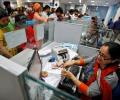
The rally in PSBs, analysts feel, was more a knee-jerk reaction to the development, and the actual benefits will start to accrue once the addition takes place in 2024. "The actual benefit for banks from the inclusion in JP Morgan's EM Index will accrue from June 2024 onwards. "Until then, the larger fundamentals of the market will dictate the moves. "Once the initial euphoria subsides, bond markets will look to global cues which may trigger fresh selling," said Siddharth Khemka, head of retail research, Motilal Oswal Financial Services.

From the 30 Sensex pack, ICICI Bank climbed 3 per cent after the private sector lender posted a 14.5 per cent growth in standalone profit to Rs 11,746 crore for the second quarter ended September 2024. JSW Steel, Mahindra & Mahindra, Adani Ports, Tata Steel, Sun Pharma, Hindustan Unilever, Tata Motors and State Bank of India were the other big gainers from the pack.

The ideal time to invest in sector funds, is during a downturn so that investors can capitalise on a turnaround in 1.5 to 2 years.
The new entrants comprise Asian Paints, Britannia, Titan, Nestl, Bajaj Finance and Bajaj Finserv.

The proposed reforms in goods and services tax (GST) announced by the government last week, coupled with the eighth pay commission dole-out, is likely to push consumption-driven stocks - such as air conditioners (ACs), select automobiles, fast-moving consumer goods (FMCG), retail, and counters of quick-service restaurants (QSRs) - into higher orbit over the next few months, believe analysts.

Among the 30 Sensex companies, Larsen & Toubro, Power Grid, NTPC, State Bank of India, Reliance Industries and HDFC Bank were the biggest laggards. Sun Pharma and Nestle were the only gainers.

Sun Pharma, Tata Steel, State Bank of India, Axis Bank, Tata Motors, Larsen & Toubro and ICICI Bank were also among the Sensex gainers. HCL Tech, UltraTech Cement, Nestle and Hindustan Unilever were among the laggards.

'Even if India is attractive, FPIs currently lack the funds to invest, as money is being redirected to the US.'
Stock markets will be driven by further developments on the US-China tariff war front along with quarterly earnings announcements from IT majors Wipro and Infosys in a holiday-shortened week, analysts said. Global market trends and trading activity of foreign investors would also dictate market movement this week, experts noted.

After a sharp fall in the share prices of HDFC Bank and other private sector lenders in the past three days, the BFSI (banking, financial services and insurance) sector weighting in the Nifty50 has slipped to a seven-year low of 32.03 per cent, down from nearly 36.6 per cent at the end of March 2023 and 34.5 per cent at the end of December 2023.

The strategy was straightforward - aggressively buy select Bank Nifty index stocks in the morning and sell them just as forcefully later in the day, triggering a sharp drop in share prices.

Among Sensex shares, Bajaj Finserve, ICICI Bank, Bharti Airtel, Bajaj Finance, Sun Pharma, Maruti Suzuki, ITC, and Nestle were the lead gainers. On the other hand, L&T Wipro, IndusInd Bank and TCS and Tata Motors were the lead losers.

Since March 2020, when the Nifty50 plummeted to 7,511 following the announcement of a nationwide lockdown, the stock market has been on an upward trajectory. Over the next four years, the major market index has delivered a remarkable compounded annual growth rate (CAGR) of over 31.5 per cent. In the past year alone, the Nifty50 has gained by 27 per cent, hitting a succession of record highs.
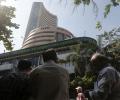
In the broader market, the S&P BSE Midcap ended 0.1% down, while the S&P BSE Smallcap index gained 0.3%.
